

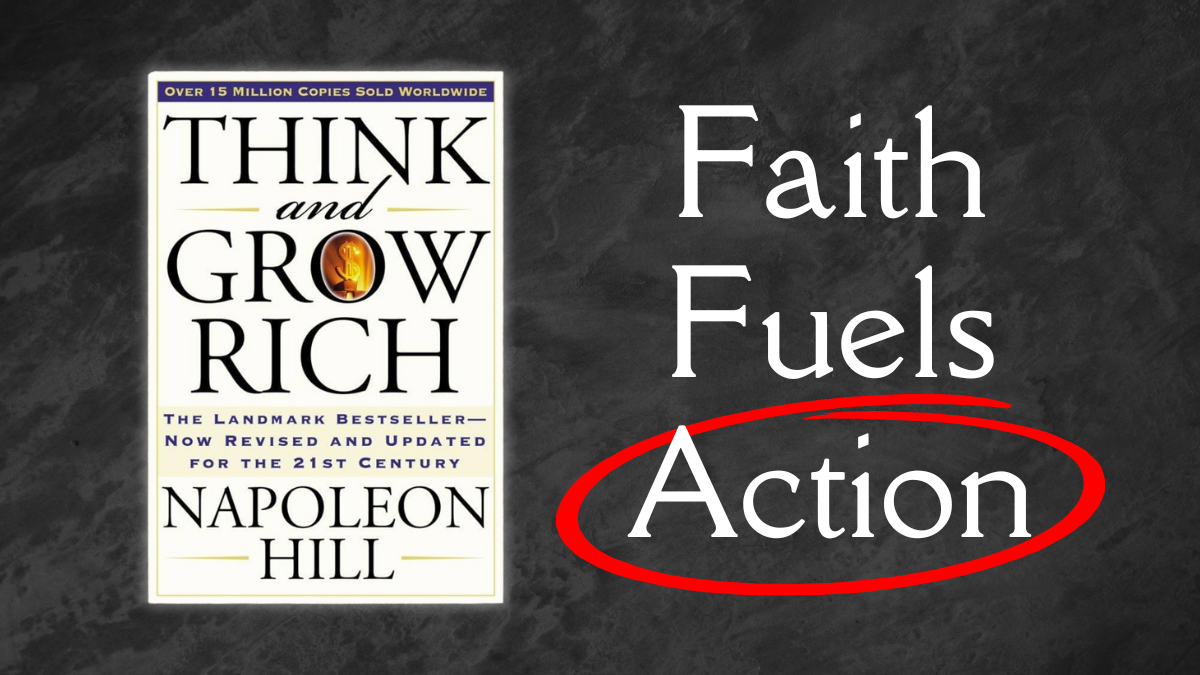
The Power of Thought and Desire: Lessons from Think and Grow Rich
Discover key ideas from Think and Grow Rich by Napoleon Hill on desire, belief, persistence, and building success through mindset.
Latest posts



Do You Enjoyed This Article?
Join our community and get updated every week. We have a lot more just for you! Let’s join us now.
Few books have influenced the world of personal development as deeply as Think and Grow Rich. First published in 1937, the book has remained relevant for decades, not because it teaches secret formulas for money, but because it focuses on mindset, belief, and persistence. Napoleon Hill’s core idea is simple yet profound. What we think about consistently shapes what we become.
Despite its title, Think and Grow Rich is not just about money. It is about success in all areas of life. Hill uses wealth as a clear and measurable outcome, but his principles apply equally to career growth, personal fulfillment, and long-term achievement.
“Whatever the mind can conceive and believe, it can achieve.”
Napoleon Hill
This quote sets the tone for the entire book. Hill believed that success begins in the mind long before it appears in reality.
The Importance of Desire
At the foundation of Hill’s philosophy is desire. Not a casual wish, but a deep, burning desire. Hill argues that without strong desire, goals remain vague and powerless.
“The starting point of all achievement is desire.”
Napoleon Hill
He encourages readers to define exactly what they want, whether it is financial independence, professional success, or personal growth. According to Hill, clarity transforms desire into direction. When goals are specific, the mind begins to search for ways to achieve them.
Hill also emphasizes commitment. Desire must be backed by determination and a willingness to persist through difficulty. Half-hearted goals rarely produce meaningful results.
Faith and Belief Shape Reality
Another major theme in Think and Grow Rich is faith. Hill describes faith as a state of mind that can be developed through repetition, affirmation, and focused thought. He believed that belief acts as fuel for action.
“Faith is the chemical which, when mixed with prayer, gives one direct communication with Infinite Intelligence.”
Napoleon Hill
While this language reflects the era in which the book was written, the underlying idea is timeless. Confidence and belief influence behavior. When people believe they can succeed, they are more likely to act decisively, persist longer, and recover faster from failure.
Hill argues that doubt weakens effort, while belief strengthens it. The mind accepts what it is repeatedly told, whether positive or negative.
Autosuggestion and the Power of Repetition
Autosuggestion is Hill’s term for influencing the subconscious mind through repeated thoughts and statements. He believed that the subconscious plays a major role in shaping habits, emotions, and actions.
“Every thought that is held in the mind and mixed with faith begins at once to translate itself into its physical equivalent.”
Napoleon Hill
Hill encourages readers to regularly repeat their goals aloud, especially with emotion. This practice is not about magic or blind optimism. It is about training the mind to focus on opportunity instead of limitation.
By consistently feeding the mind positive direction, people become more aware of ideas, resources, and actions aligned with their goals.
Specialized Knowledge and Learning
Hill makes an important distinction between general knowledge and specialized knowledge. He argues that success rarely comes from knowing everything. It comes from knowing the right things and knowing how to apply them.
“Knowledge will not attract money unless it is organized and intelligently directed.”
Napoleon Hill
This idea encourages lifelong learning with purpose. Hill suggests that readers seek practical knowledge related to their goals and surround themselves with people who complement their skills.
In today’s world, where information is easily accessible, this lesson feels especially relevant. What matters is not how much you know, but how effectively you use what you know.
Imagination as a Creative Force
One of the most inspiring chapters in Think and Grow Rich focuses on imagination. Hill describes imagination as the workshop of the mind, where ideas are shaped into plans.
“Ideas are the beginning points of all fortunes.”
Napoleon Hill
Hill believed that imagination allows people to see possibilities before they exist. Many breakthroughs, inventions, and businesses began as ideas that others initially dismissed.
He encourages readers to actively use imagination to solve problems, create opportunities, and visualize success. This creative thinking, combined with action, becomes a powerful driver of progress.
Persistence and the Ability to Endure
Persistence is one of the strongest recurring themes in the book. Hill repeatedly emphasizes that most people fail not because of lack of talent or opportunity, but because they quit too soon.
“Persistence is to the character of man as carbon is to steel.”
Napoleon Hill
He explains that setbacks, failures, and delays are part of every success story. The difference between those who succeed and those who do not is often the willingness to keep going when results are slow.
Hill warns that impatience is one of the greatest enemies of success. Progress may be invisible for long periods, but effort is rarely wasted.
The Power of the Master Mind
Another key idea in Think and Grow Rich is the Master Mind principle. Hill defines it as the coordination of knowledge and effort between two or more people working toward a common goal.
“No individual may have sufficient experience, education, native ability, and knowledge to ensure the accumulation of a great fortune without the cooperation of other people.”
Napoleon Hill
Hill believed that collaboration multiplies intelligence and creativity. When people share ideas, challenge each other, and support a shared vision, the results are often greater than individual effort alone.
This lesson highlights the importance of relationships, mentorship, and teamwork in achieving long-term success.
Controlling Fear and Negative Thinking
Hill identifies fear as one of the greatest obstacles to success. He focuses on six basic fears, including fear of poverty, criticism, failure, and loss. These fears often operate quietly, influencing decisions without conscious awareness.
“Fears are nothing more than a state of mind.”
Napoleon Hill
According to Hill, fear can be weakened through understanding, self-discipline, and positive focus. By recognizing limiting beliefs, people regain control over their actions.
This section of the book encourages emotional awareness and mental discipline, both of which are essential for growth.
Why Think and Grow Rich Still Matters
Even though Think and Grow Rich was written nearly a century ago, its lessons remain relevant. The language may feel old-fashioned at times, but the principles behind it are timeless.
The book does not offer shortcuts. It emphasizes clarity, belief, persistence, and self-responsibility. These ideas apply regardless of industry, background, or era.
What makes the book powerful is not any single concept, but how all the ideas work together. Desire creates direction. Belief fuels action. Persistence sustains effort. Collaboration expands potential.
Final Thoughts
Think and Grow Rich is not a book you read once and forget. It is a book that invites reflection and repeated study. Its value lies in how its ideas are applied, not just understood.
“Success comes to those who become success conscious.”
Napoleon Hill
Napoleon Hill reminds readers that success begins internally before it appears externally. By shaping thoughts, beliefs, and habits with intention, people can gradually shape their outcomes as well. For anyone interested in personal growth, mindset, and long-term achievement, Think and Grow Rich remains a foundational read.
Share to

Mustafiz Man
GoHighLevel & Paid Ads Expert