

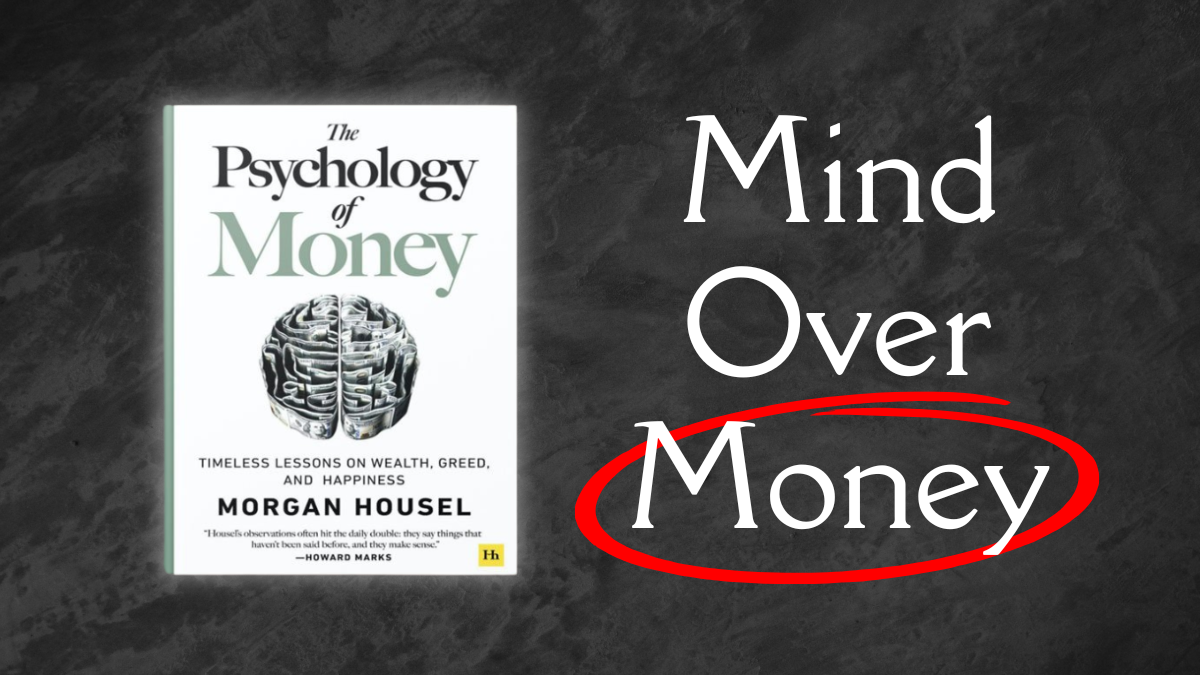
The Psychology of Money: Timeless Lessons on Wealth, Behavior, and Freedom
A thoughtful breakdown of The Psychology of Money by Morgan Housel and why behavior matters more than intelligence in managing money.
Latest posts



Do You Enjoyed This Article?
Join our community and get updated every week. We have a lot more just for you! Let’s join us now.
Most books about money focus on numbers. They talk about spreadsheets, formulas, strategies, and market predictions. The Psychology of Money takes a very different approach. Morgan Housel argues that financial success has far less to do with intelligence and far more to do with behavior. How we think, feel, and act around money often matters more than what we know.
This idea is what makes the book so relatable. Housel does not assume that people make decisions like machines. He understands that money decisions are shaped by emotion, fear, pride, past experiences, and personal values. Instead of teaching readers how to beat the market, he explains why people behave the way they do with money and how that behavior affects long-term outcomes.
“Doing well with money has little to do with how smart you are and a lot to do with how you behave.”
Morgan Housel
That sentence alone sets the tone for the entire book.
Everyone Has a Different Money Story
One of the strongest ideas in The Psychology of Money is that no two people experience money the same way. Our views on saving, spending, and investing are shaped by our upbringing, our parents, our culture, and the economic conditions we grew up in.
Someone who lived through a financial crisis may be cautious and risk-averse. Someone who grew up during a long bull market may feel comfortable taking big risks. Neither perspective is irrational. They are simply different life experiences.
“People do some crazy things with money. But no one is crazy.”
Morgan Housel
Housel emphasizes that understanding this difference is essential. Judging others for their financial choices rarely makes sense when you consider that they are playing a different game with different rules.
Luck, Risk, and the Stories We Tell
One of the most eye-opening themes in the book is the role of luck and risk. Success stories often highlight hard work and smart decisions, while downplaying chance. At the same time, failures are frequently blamed entirely on poor choices, ignoring bad luck.
Housel reminds readers that outcomes are rarely the result of a single factor.
“Nothing is as good or as bad as it seems.”
Morgan Housel
Recognizing the influence of luck helps keep ego in check during success and hope alive during failure. It also encourages humility, which is essential for long-term financial survival.
Understanding risk works the same way. Risk is what remains after you think you have accounted for everything. It is the unexpected event that changes outcomes. Planning for uncertainty, rather than trying to predict the future perfectly, leads to stronger financial decisions.
The Importance of Long-Term Thinking
If there is one lesson Housel repeats throughout the book, it is the value of patience. Many financial mistakes happen because people try to move too fast or chase quick results.
“The most powerful force in investing is time.”
Morgan Housel
Housel explains that compounding works best when it is given room to grow. This applies not just to investing, but also to careers, relationships, and reputation. Small gains, when sustained over long periods, often outperform bold but inconsistent actions.
He points out that many of the world’s wealthiest investors did not succeed because of extraordinary brilliance. They succeeded because they stayed invested for a very long time and avoided catastrophic mistakes.
Wealth Is Not What You See
One of the most eye-opening sections of the book focuses on the difference between being rich and being wealthy. Being rich is about visible income and spending. Wealth is about what you do not spend.
“Wealth is what you don’t see.”
Morgan Housel
Housel explains that expensive cars, large homes, and luxury items are often signs of spending, not saving. True financial security comes from having options, flexibility, and time. That kind of wealth is quiet and often invisible.
This idea challenges modern culture, which rewards display and consumption. The book encourages readers to rethink what success actually looks like and whether chasing appearances is worth the cost.
Enough Is a Powerful Concept
Another important idea in The Psychology of Money is knowing when enough is enough. Many financial problems arise not from lack of income, but from an endless desire for more.
“There is no reason to risk what you have and need for what you don’t have and don’t need.”
Morgan Housel
Housel argues that contentment is a financial skill. People who know their limits are more likely to protect what they have built. Those who constantly chase more often expose themselves to unnecessary risk.
This lesson feels especially relevant in a world driven by comparison. Social media makes it easy to feel behind, even when you are doing well. The book reminds readers that growth without boundaries can be dangerous.
Freedom Is the Highest Dividend
For Housel, the ultimate goal of money is freedom. Not luxury. Not status. Freedom.
“The ability to do what you want, when you want, with who you want, for as long as you want, is priceless.”
Morgan Housel
Money gives you control over your time. It allows you to say no, walk away, and make choices based on values rather than pressure. This perspective reframes financial success as something deeply personal, not competitive.
Instead of asking how much money you need, the book encourages readers to ask what kind of life they want and how money can support it.
Why Simple Financial Rules Work Best
Another key takeaway from The Psychology of Money is that simple strategies often outperform complex ones. Financial plans fail not because they are mathematically flawed, but because they are hard to stick to.
“A good decision is one that is reasonable enough to be sustained.”
Morgan Housel
Housel suggests that the best plan is the one you can follow during stress, boredom, and uncertainty. Consistency matters more than optimization. Emotional comfort is often more important than theoretical returns.
This approach makes the book especially useful for everyday readers. It removes the pressure to be perfect and replaces it with the goal of being reasonable.
Why The Psychology of Money Stands Out
What makes The Psychology of Money unique is its tone. It is calm, thoughtful, and deeply human. Housel does not lecture or overwhelm. He tells stories, asks questions, and invites reflection.
The book does not try to predict markets or sell a formula for wealth. Instead, it helps readers build a healthier relationship with money. It focuses on mindset, patience, humility, and self-awareness.
These lessons remain relevant regardless of income level or market conditions.
Final Thoughts
The Psychology of Money is not about becoming rich quickly. It is about making better decisions over a lifetime. It reminds readers that money is a tool, not a scoreboard.
“Financial success is not a hard science. It’s a soft skill.”
Morgan Housel
By understanding behavior, respecting uncertainty, and valuing freedom over excess, the book offers a timeless framework for thinking about money. For anyone who wants clarity, balance, and perspective in their financial life, The Psychology of Money is a book worth reading and revisiting.
Share to

Mustafiz Man
GoHighLevel & Paid Ads Expert