

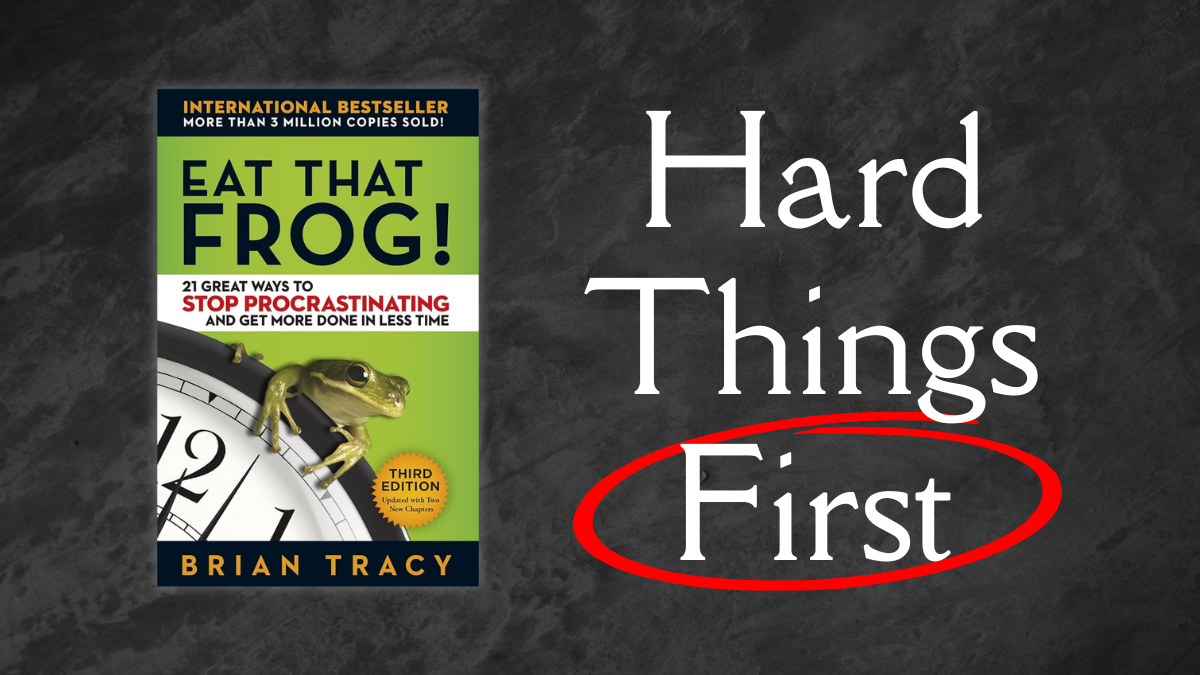
Eat That Frog: Beat Procrastination and Get More Done
Explore ideas from Eat That Frog by Brian Tracy on time management, clarity, and overcoming procrastination.
Latest posts



Do You Enjoyed This Article?
Join our community and get updated every week. We have a lot more just for you! Let’s join us now.
Procrastination is something almost everyone struggles with. We delay difficult tasks, distract ourselves with easier work, and tell ourselves we will start tomorrow. Eat That Frog by Brian Tracy tackles this problem head-on with a simple but powerful idea. If you start your day by doing the hardest and most important task first, the rest of the day becomes easier and more productive.
The title comes from a famous saying often attributed to Mark Twain. If you eat a live frog first thing in the morning, nothing worse will happen to you all day. Tracy uses this metaphor to describe tackling your biggest and most uncomfortable task before anything else.
“If you have to eat two frogs, eat the ugliest one first.”
Brian Tracy
This one idea forms the backbone of the book. Productivity is not about doing more things. It is about doing the right things, in the right order.
The Real Cost of Procrastination
Brian Tracy explains that procrastination is not caused by laziness. It is often caused by lack of clarity, fear of failure, or feeling overwhelmed. When tasks feel unclear or difficult, we naturally avoid them.
“Procrastination is the thief of time.”
Brian Tracy
Every time you delay an important task, you pay a price. Stress increases, confidence drops, and opportunities slip away. Tracy emphasizes that learning to manage procrastination is one of the most valuable skills a person can develop.
He reminds readers that successful people are not immune to resistance. They simply learn how to act despite it.
Clarity Comes Before Action
One of the strongest themes in Eat That Frog is clarity. Tracy insists that productivity begins with clear goals and priorities. You cannot work effectively if you do not know what truly matters.
“The very act of thinking through what you want to accomplish increases the likelihood that you will achieve it.”
Brian Tracy
Tracy encourages readers to write down their goals and tasks. Writing forces clarity. It transforms vague intentions into specific actions.
He also suggests reviewing goals daily. When your goals are clear, it becomes easier to identify your frog, the task that has the greatest impact on your results.
Focus on High-Value Activities
Not all tasks are equal. Tracy introduces the idea that a small number of activities produce most results. This idea is often referred to as the 80/20 principle.
“Only about 20 percent of what you do contributes 80 percent of your results.”
Brian Tracy
The problem is that low-value tasks are often easier and more enjoyable. Checking emails, attending unnecessary meetings, or organizing files can feel productive without producing real progress.
Tracy urges readers to identify high-value tasks and give them priority. These tasks are usually the hardest ones, which is exactly why they become frogs.
Planning Makes Execution Easier
Another key lesson in the book is the importance of planning. Tracy strongly believes that every minute spent planning saves many minutes during execution.
“Every minute you spend in planning saves ten minutes in execution.”
Brian Tracy
He recommends planning your day in advance, ideally the night before. This allows you to start work with clarity and purpose instead of reacting to distractions.
Tracy also encourages breaking large tasks into smaller steps. This reduces overwhelm and makes it easier to begin. Momentum builds once action starts.
Discipline Beats Motivation
Motivation comes and goes. Discipline lasts. Tracy emphasizes that self-discipline is the foundation of personal success.
“Self-discipline is the ability to make yourself do what you should do, when you should do it, whether you feel like it or not.”
Brian Tracy
Waiting to feel motivated often leads to delay. Productive people act first and let motivation follow action. By eating your frog early in the day, you build confidence and momentum that carry into other tasks.
This habit trains the mind to associate discipline with progress and reward.
Time Blocking and Single-Tasking
In a world full of distractions, Tracy stresses the importance of focused work. Multitasking, he explains, reduces efficiency and increases mistakes.
“The key to success is action.”
Brian Tracy
Tracy recommends working in uninterrupted blocks of time on one important task. Turning off notifications, closing unnecessary tabs, and creating a quiet environment help protect focus.
Single-tasking allows deeper concentration and faster completion. When the frog is finished, the rest of the day feels lighter and more manageable.
Develop a Sense of Urgency
Another recurring idea in Eat That Frog is urgency. Tracy explains that high performers develop a habit of acting quickly on important tasks.
“Successful people are simply those with successful habits.”
Brian Tracy
By training yourself to start immediately on your most important task, you reduce hesitation and doubt. Over time, urgency becomes a habit rather than a forced effort.
This mindset creates a bias toward action instead of delay.
Build Confidence Through Completion
One of the most rewarding aspects of eating the frog is the boost in confidence it provides. Completing a difficult task early creates a sense of control and accomplishment.
Tracy explains that confidence grows through action, not thinking. Each completed frog strengthens self-belief and reinforces productive habits.
“You feel positive and energized when you are making progress toward something important.”
Brian Tracy
This emotional reward makes it easier to repeat the behavior the next day.
Why Eat That Frog Still Works
Despite being written years ago, Eat That Frog remains relevant. The tools are simple, but they address a timeless challenge. Distraction, avoidance, and overwhelm still affect modern work just as much as they did before smartphones and social media.
The book does not rely on apps or complex systems. It focuses on mindset, clarity, and discipline. These principles work in any profession and at any stage of life.
What makes the book effective is its practicality. Each chapter offers actionable advice that can be applied immediately.
Final Thoughts
Eat That Frog is not about working longer hours or doing more tasks. It is about making better choices with your time and energy.
“Your ability to discipline yourself to set clear priorities and then work toward them is the key to achieving anything worthwhile.”
Brian Tracy
Brian Tracy reminds readers that success is built one task at a time. When you consistently start your day by tackling the most important work, procrastination loses its power. Progress becomes intentional. Confidence grows naturally. And over time, small daily victories lead to meaningful results.
If you struggle with focus, delay, or overwhelm, Eat That Frog offers a simple place to start. Do the hard thing first. Everything else becomes easier after that.
Share to

Mustafiz Man
GoHighLevel & Paid Ads Expert