

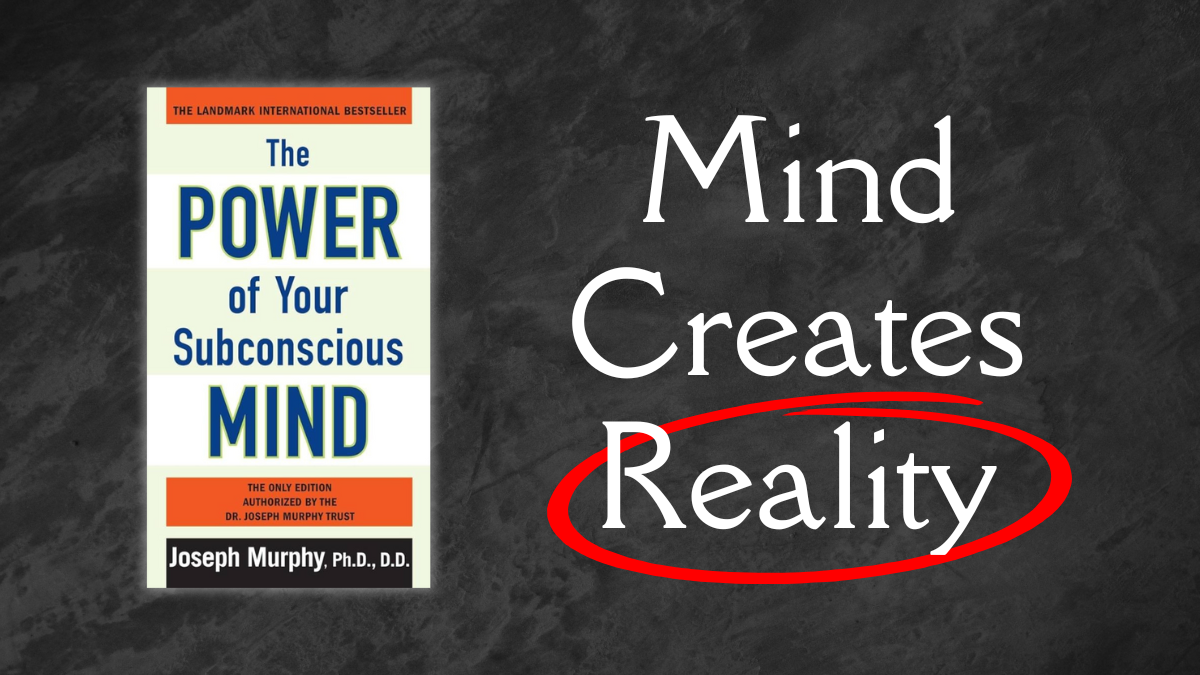
The Power of Your Subconscious Mind and The Science of Thought
Discover the core ideas from The Power of Your Subconscious Mind by Joseph Murphy and learn how thoughts and beliefs shape your life.
Latest posts



Do You Enjoyed This Article?
Join our community and get updated every week. We have a lot more just for you! Let’s join us now.
Many of our daily actions, habits, and emotional reactions happen without conscious thought. We often believe we are fully in control of our decisions, yet much of our behavior is guided by beliefs stored deep within the subconscious mind. The Power of Your Subconscious Mind explores this hidden influence and explains how understanding it can transform health, relationships, confidence, and success.
Joseph Murphy presents a simple but powerful idea. Your subconscious mind accepts what you consistently think and feel, and then works to make those thoughts real. The book does not rely on complex psychology or scientific language. Instead, it focuses on practical insight and timeless wisdom.
“As you think, so shall you be.”
Joseph Murphy
This statement sets the foundation for the entire book. According to Murphy, the quality of your thoughts directly shapes the quality of your life.
Understanding the Conscious and Subconscious Mind
Murphy begins by explaining the difference between the conscious and subconscious mind. The conscious mind is responsible for reasoning, decision-making, and logic. The subconscious mind, on the other hand, stores beliefs, emotions, habits, and memories.
“Your subconscious mind does not argue with you. It accepts what your conscious mind decrees.”
Joseph Murphy
This idea is central to the book. The subconscious does not judge whether a thought is positive or negative. It simply accepts repeated ideas and acts upon them. If you consistently think in terms of fear, doubt, or limitation, the subconscious works to reflect those beliefs in your experiences.
This understanding places responsibility back in the hands of the individual. Change begins with awareness.
The Power of Belief
Belief plays a crucial role in shaping outcomes. Murphy explains that belief is not just wishful thinking. It is a deep inner acceptance that something is possible.
“Believe in the power of your subconscious mind and you will be amazed.”
Joseph Murphy
When belief is strong, the subconscious mind responds by guiding behavior, intuition, and perception. This can lead to improved confidence, better decision-making, and increased resilience.
Murphy often refers to real-life examples where belief influenced healing, success, and personal growth. Whether or not one interprets these stories spiritually or psychologically, the message remains clear. What you believe consistently influences how you act.
Repetition Shapes Reality
One of the most practical lessons in the book is the role of repetition. Thoughts repeated with emotion eventually become beliefs.
“Every thought is a cause and every condition is an effect.”
Joseph Murphy
Murphy encourages readers to be mindful of their internal dialogue. Negative self-talk reinforces fear and limitation. Positive statements, when repeated calmly and consistently, help reprogram the subconscious.
This process does not require force or struggle. Murphy emphasizes relaxation and faith rather than effort. The subconscious responds best to calm confidence, not tension.
Using Affirmations Effectively
Affirmations are a key tool discussed throughout the book. Murphy explains that affirmations work when they feel natural and believable.
“The subconscious mind responds to mental imagery and thought.”
Joseph Murphy
Instead of forcing yourself to believe something that feels unrealistic, Murphy suggests gently affirming positive truths in a relaxed state, especially before sleep. At this time, the subconscious mind is more receptive.
Affirmations are not about ignoring reality. They are about shaping perception and reinforcing constructive beliefs that support growth.
Healing Begins in the Mind
One of the most discussed topics in The Power of Your Subconscious Mind is healing. Murphy believed that the mind plays a significant role in physical and emotional well-being.
“Your body is controlled by your mind.”
Joseph Murphy
He shares examples of people who experienced improvement in health after changing their thought patterns. While modern readers may interpret these stories differently, the underlying principle remains relevant. Stress, fear, and anxiety can negatively affect health. Calm, hopeful thinking can support recovery.
Murphy encourages trust in the body’s natural intelligence and the power of belief to support healing processes.
Overcoming Fear and Negative Patterns
Fear is one of the biggest obstacles discussed in the book. Murphy explains that fear often comes from negative beliefs stored in the subconscious.
“Fear is man’s greatest enemy.”
Joseph Murphy
The solution, according to Murphy, is not resistance but replacement. Fearful thoughts must be replaced with calm, confident ideas. This process takes patience, not force.
By becoming aware of habitual negative thinking and gently redirecting it, individuals regain a sense of control and inner peace.
Success and the Subconscious Mind
Murphy connects success directly to subconscious programming. People who expect success are more likely to act confidently and persist through challenges.
“The subconscious mind is the seat of habit.”
Joseph Murphy
Habits are deeply rooted in subconscious patterns. By changing beliefs about worth, ability, and opportunity, people naturally adopt behaviors that support success.
Murphy emphasizes that success is not reserved for a select few. It is available to anyone willing to align thoughts with constructive beliefs.
The Importance of Gratitude
Gratitude plays a subtle but powerful role in the book. Murphy explains that gratitude shifts attention away from lack and toward abundance.
“Gratitude is the law of increase.”
Joseph Murphy
By focusing on what is already working, the mind becomes more receptive to positive outcomes. Gratitude also creates emotional balance, which helps the subconscious function more effectively.
This practice encourages contentment without complacency.
Why the Book Still Resonates Today
Although The Power of Your Subconscious Mind was written decades ago, its message remains relevant. Modern psychology supports many of its ideas, especially around mindset, habit formation, and self-talk.
The language may feel spiritual at times, but the principles apply regardless of belief system. Awareness, repetition, belief, and emotional regulation are timeless tools.
The book stands out because it empowers readers rather than overwhelming them. It suggests that meaningful change does not require extreme effort, only consistent inner alignment.
Final Thoughts
The Power of Your Subconscious Mind is not about instant miracles or unrealistic promises. It is about understanding how thoughts influence behavior and outcomes over time.
“Change your thoughts and you change your destiny.”
Joseph Murphy
Joseph Murphy reminds readers that the mind is always at work, shaping experiences quietly and consistently. By becoming intentional about what we think and believe, we gain the ability to influence our lives from the inside out.
For anyone interested in mindset, inner peace, and personal growth, this book offers a gentle but powerful starting point. Change does not begin with the world around you. It begins with the thoughts you allow to take root within.
Share to

Mustafiz Man
GoHighLevel & Paid Ads Expert